

Are Soy Candles Safe? What You Need to Know
Table of Contents
- What Makes Soy Wax Different From Paraffin
- Are Soy Candles Safe for Indoor Air Quality?
- Are Wax Melts Safer Than Candles?
- Benefits of Soy Wax Melts for Your Home
- Pet-Friendly Home Fragrance: What to Consider
- How to Choose Safe Wax Melts
- Conclusion
- Frequently Asked Questions
Last Updated: September 21, 2026
What Makes Soy Wax Different From Paraffin
Soy wax is a vegetable-based wax derived from soybean oil, while paraffin is a petroleum-based wax refined from crude oil. That origin difference shapes everything downstream: how the wax burns, what it releases into your air, and how long a melt lasts.

This guide from Ruby Creek Candle Co. examines whether soy candles are safe, and the honest answer is that safety depends on more than the wax alone. The wax base matters, but so do the fragrance oils, the wick, and how you ventilate the room. Most articles stop at "soy good, paraffin bad." That framing is too simple, and it leaves out the factors that actually affect your indoor air quality.
How Soy Wax Burns Compared to Petroleum-Based Wax
Soy wax has a lower melting point than paraffin, so it burns at a cooler temperature. Cooler combustion generally produces less soot emission and fewer combustion byproducts, which is the main reason soy gets labeled the cleaner option.
That said, "cleaner" is relative, not absolute. Any wax that burns produces some particulate matter and volatile organic compounds. The Canada Consumer Product Safety Act sets general safety expectations for consumer products, but it does not certify a wax as "non-toxic."
| Factor | Soy Wax | Paraffin Wax |
|---|---|---|
| Source | Soybean oil (renewable) | Petroleum (non-renewable) |
| Burn temperature | Cooler | Hotter |
| Soot tendency | Lower | Higher |
| Scent throw | Moderate, gentler | Stronger, sharper |
| Sustainability | Renewable, biodegradable | Fossil-fuel based |
Are Soy Candles Safe for Indoor Air Quality?
Soy candles and soy wax melts are generally considered safe for indoor air quality when the fragrance load is moderate, the wick (if any) is lead-free, and the room has air exchange. The wax base is rarely the problem. The fragrance load, the wick, and the ventilation are where most concerns originate.

Here is the part most guides miss: a "100% soy wax" label tells you nothing about what was added to it. Synthetic fragrance, dyes, and metal-core wicks can all introduce indoor pollutants regardless of the wax base. This is why label transparency matters more than the wax type alone.
Understanding Soot, Particulate Matter, and Combustion Byproducts
Particulate matter refers to the tiny solid and liquid particles released when a candle or melt burns. These particles can irritate the respiratory system, especially in people with asthma or allergies. The smallest fraction, fine and ultrafine particles, travels deepest into the lungs and stays airborne longest.
Combustion byproducts from scented candles can include volatile organic compounds and, in poorly ventilated spaces, trace amounts of compounds like benzene and toluene. The key phrase is "poorly ventilated." In a normal room with air circulation, concentrations stay low. In a sealed bedroom with a melt running for hours, they accumulate.
Wick Material Safety: The Overlooked Variable
Most articles focus on wax and skip the wick entirely. That is a mistake. The wick is the part that actually burns, and its core material determines what enters your air.
- Lead-core wicks were historically used to keep a wick upright as it burned. Lead is a neurotoxin, and lead-core wicks have been prohibited in consumer candles sold in Canada for years. If you own an old imported candle with a stiff, metallic wire inside the wick, treat it as suspect and dispose of it.
- Zinc-core wicks are the modern replacement. They are generally considered safe at candle-combustion temperatures, but a low-quality zinc core can still release metal particulates if the wick is not trimmed and the flame runs hot.
- Cotton and paper wicks are the simplest option and produce the least metal residue. For wax melts specifically, this is moot; a melt warmer has no wick at all, which is one reason melts sidestep the entire wick-safety question.
If you burn candles rather than melts, check the wick before every use. A wick that clinks, feels like wire, or leaves a metallic residue on the trimmer is a red flag.
Ventilation Best Practices That Actually Move the Needle
"Crack a window" is the standard advice, but the mechanics matter. Indoor air exchange is measured in air changes per hour (ACH). A typical closed bedroom sits near 0.5 ACH; opening a window in a mild climate can push a room toward 2-4 ACH, which is enough to keep combustion byproducts from pooling.
Practical steps that reduce exposure:
- Trim wicks to about 5 mm before every burn to limit soot and flame height
- Keep melts and candles away from drafts and curtains
- Crack a window or run a fan for cross-ventilation while burning
- Avoid burning for more than 3-4 hours at a stretch
- Let the room air out for 15-20 minutes after you extinguish or unplug
Are Wax Melts Safer Than Candles?
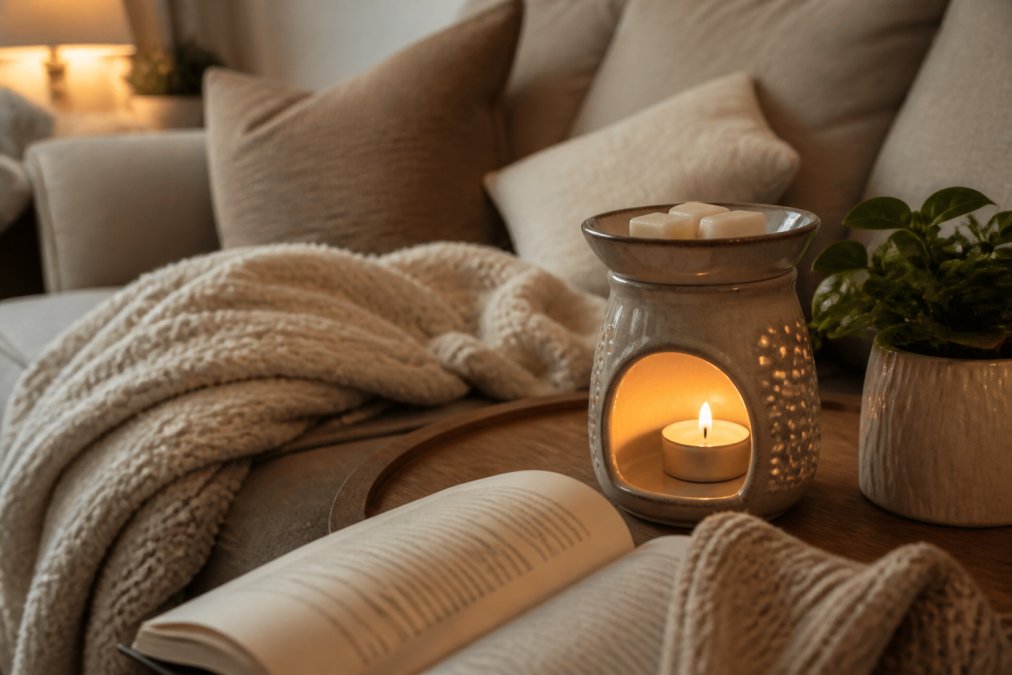
Wax melts are often safer than candles because they have no open flame. A warmer heats the wax indirectly, so there is no combustion at the wick, which means less soot and a lower fire risk.
SUNDAY MORNING COFFEE | SOY WAX MELT →

That distinction matters.
Benefits of Soy Wax Melts for Your Home
Soy wax melts offer a renewable, biodegradable base, a gentler scent throw, and no open flame. For renters and anyone who wants fragrance without smoke, they solve several problems at once.
Pet-Friendly Home Fragrance: What to Consider
Pet-friendly home fragrance means choosing scents and formats that avoid known irritants for animals. Some essential oils, including certain citrus and tea tree varieties, can be problematic for cats and dogs, so "natural" does not automatically mean pet-safe.
If you share your home with animals, keep these points in mind:
- Choose unscented or lightly scented melts around birds and small pets
- Keep warmers well out of reach and cords secured
- Ventilate the room, since pets are closer to the floor where heavier particles settle
- Watch for coughing, sneezing, or lethargy after introducing a new scent
How to Choose Safe Wax Melts
Choosing safe wax melts comes down to five checks: the wax base, the fragrance source, the wick (for candles), the label transparency, and the container. A melt that passes all five is one you can use with confidence.
Use this checklist before you buy:
- Wax listed as 100% soy or a clearly named natural wax blend
- Fragrance oils stated as paraben and phthalate free
- Full ingredient list, not just "fragrance"
- No undisclosed dyes or synthetic additives
- Recyclable or reusable container
- Clear burn time guidance on the label
Fragrance Oils, Essential Oils, and Label Transparency
Fragrance oils and essential oils are not interchangeable. Essential oils are plant-derived and concentrated; fragrance oils are formulated for consistent scent and can be synthetic, natural, or a blend. Neither is inherently safer, but fragrance oils made without phthalates and parabens reduce one category of chemical exposure.
What Safety Standards and Certifications Actually Mean
This is the part almost no competitor explains. A certification is only useful if you know what it tests for. Here is what the common ones cover:
- IFRA standards (International Fragrance Association) govern fragrance safety. An IFRA-compliant fragrance has been assessed against concentration limits for skin contact and inhalation categories. When a brand says its fragrance is IFRA-compliant, it means the fragrance house followed those limits, not that the finished melt was independently tested.
- ASTM standards (ASTM International) cover test methods and specifications, including candle fire-safety and burn-performance testing. An ASTM-referenced candle has been evaluated against a defined burn protocol, which is more meaningful than a vague "clean-burning" claim.
- Health Canada regulates consumer products under the Canada Consumer Product Safety Act and can recall products that pose a danger. A recall history is a stronger signal than any marketing badge.
Conclusion
The question of whether soy candles are safe has a nuanced answer: the wax base is a good starting point, but the fragrance oils, wick, and ventilation decide the outcome. Choosing a melt with a transparent label and using it in a ventilated space keeps exposure low.
Frequently Asked Questions
Are soy candles safe for the lungs?
Soy candles generally produce less soot and particulate matter than paraffin candles, which may reduce respiratory irritation. However, any candle with synthetic fragrance can release volatile organic compounds when burned. Proper ventilation and wick trimming matter more than wax type alone. If you are sensitive to smoke or have respiratory concerns, wax melts used in a warmer eliminate the open flame and combustion byproducts entirely, making them a gentler option for indoor air quality.
Are wax melts safer than candles?
Wax melts are often considered safer because they use a flameless warmer instead of an open flame. Without combustion, there is no soot emission, no smoke residue, and no risk of an unattended flame. This matters for households with pets or children. The safety difference comes down to how the fragrance is released: melting versus burning. Choosing melts made with 100% soy wax and phthalate-free fragrance oils further reduces chemical exposure in your indoor environment.
Are soy wax melts safe for pets?
Soy wax itself is generally considered safe around pets, but fragrance oils are the bigger concern. Some synthetic fragrances contain compounds that can irritate a pet's respiratory system. For pet-friendly home fragrance, look for melts labeled phthalate-free and paraben-free, keep the warmer out of reach, and use them in well-ventilated rooms. If your pet has known allergies or respiratory issues, consult your veterinarian before introducing any scented product into your home.
What should you look for in non-toxic wax melts?
Check the label for 100% soy wax or a natural wax blend rather than paraffin. Look for fragrance oils described as phthalate-free and paraben-free. Transparent ingredient lists and clear burn time information are good signs of a quality product. Avoid melts with vague scent descriptions or no ingredient details. Handmade, hand-poured melts from small producers often provide more label transparency than mass-produced alternatives, making it easier to verify what you are actually melting in your home.