

Are Wax Melts Safe for Small Bedrooms? A Practical Guide
Last Updated: November 9, 2026
Quick Summary
Wax melts safe for small bedrooms when you keep sessions short and ventilate well, since they release VOCs and particles into a room with slow air turnover. Run a warmer for 1 to 2 hours at a time, never all night in a sealed room, and open a window wide before and after use.
- A bedroom of about 10 square metres holds roughly 25 cubic metres of slowly turning air.
- Open the window wide for 10 to 15 minutes at the start of each melt session.
- Soy and beeswax have gentler scent throw than paraffin, suiting compact bedrooms.
- Keep the warmer across the room from the bed, never on a nightstand beside your pillow.
- Skip melts entirely in rooms where someone is wheezing or has respiratory sensitivity.
Table of Contents
- Why Small Bedrooms Change the Safety Equation
- Wax Melts and Indoor Air Quality: What Actually Enters the Air
- Choosing a Wax Type: Soy, Paraffin, and Beeswax Compared
- Ventilation When Using Wax Melts in an Enclosed Space
- How Long to Use Wax Melts in a Small Room
- Wax Warmer Placement for Bedrooms
- Sensitive Groups, Pets, and Small-Space Precautions
- Building a Scent Routine with Ruby Creek Wax Co.
- Frequently Asked Questions
Why Small Bedrooms Change the Safety Equation
Small bedrooms concentrate everything. A standard bedroom of about 10 square metres holds roughly 25 cubic metres of air, and that air turns over slowly when the door is shut and the window is closed.
That single fact is why the question of whether wax melts safe for small bedrooms has a more careful answer than the same question asked about a hallway. At Ruby Creek Wax Co., we sell handcrafted wax melts. We think the honest answer serves you better than a sales pitch.
Here is the short version: wax melts are a flame-free, smoke-free way to scent a room, and they avoid the combustion byproducts a burning wick produces.
Below, we break down what actually enters the air, how to ventilate a compact bedroom, how long to run a warmer, and how to protect pets and sensitive sleepers.
Wax Melts and Indoor Air Quality: What Actually Enters the Air
Wax melts release fragrance through evaporation, not fire. A low-wattage warmer heats the wax until the fragrance oils turn to vapor, and that vapor carries scent into the room.
That process puts three things into the air:
- Volatile organic compounds (VOCs) from the fragrance oils
- Fine airborne particles carried along with the vapor
- The scent compounds themselves, which some people's airways react to
Indoor air quality researchers treat scented products as a source of indoor pollution, not a neutral one. The U.S. Environmental Protection Agency's indoor air quality guidance notes that fragranced consumer products can contribute VOCs to indoor air, and that better ventilation is the first line of defense.
That does not make wax melts dangerous. It makes them something to use with a little thought, especially in a room where you sleep for eight hours with the door closed.
Combustion vs. Non-Combustion Fragrance Release
A wicked candle burns. Burning produces soot, carbon monoxide, and combustion byproducts. A wax melt warmer does not burn anything, so it skips that entire category of emissions.
This is the real advantage of melts, and it is a meaningful one in a small bedroom. The trade-off is that the fragrance itself, not the flame, becomes the thing to manage.
Fragrance Oils vs. Essential Oils: The Chemical Difference
Fragrance oils are lab-built scent blends. They can contain dozens of individual aroma compounds plus solvents, and they are the most common base for wax melts because they throw scent strongly and consistently.
Essential oils are plant extracts. They are not automatically safer. Many essential oils contain naturally occurring compounds that irritate airways, and "natural" says nothing about how a compound behaves when heated and inhaled.
What matters more than the label is disclosure. A maker who will tell you what is in the wax, and who avoids phthalates, gives you something to work with. Ask directly.
Choosing a Wax Type: Soy, Paraffin, and Beeswax Compared
Wax type affects how the melt behaves in a small room more than it affects safety in any dramatic way. All three main options are used safely every day. The differences are in scent throw, burn temperature, and how the wax is made.
| Wax Type | Scent Throw | Melt Behavior | Best For |
|---|---|---|---|
| Soy wax | Moderate, soft | Melts at lower heat, lasts longer per segment | Small bedrooms, sensitive noses |
| Paraffin wax | Strong, sharp | Melts fast, strong initial release | Large or open rooms |
| Beeswax | Gentle, subtle | Firm, slow to melt | Light scent in tiny spaces |
For a compact bedroom, soy and beeswax are the friendlier starting points because their scent throw is gentler. Paraffin is not unsafe, but its stronger release can overwhelm a small, closed room quickly. If you want the full comparison, our guide to soy vs paraffin wax melts benefits goes deeper on how each behaves.
Ventilation When Using Wax Melts in an Enclosed Space
Ventilation is an important safety habit for melts in a small room. Here is what actually moves air through a compact bedroom.
Air exchange is what clears VOCs and particles out. A bedroom with the door shut and the window sealed has almost none. A closed bedroom with the door and window shut turns its air over very slowly, while opening a window wide moves far more air than a slit.
A workable protocol for a room of about 10 square metres:
- Open the window wide for 10 to 15 minutes at the start of a melt session, not just a crack. A wide opening moves far more air than a slit.
- Leave the bedroom door open during use so air can move between rooms. A closed door plus a sealed window is the combination to avoid.
- Run a ceiling fan on low, or place a small fan near the doorway blowing into the room. Moving air dilutes vapor near the warmer instead of letting it pool around the bed.
- Air the room again for 5 to 10 minutes after you switch the warmer off, before you close up for sleep.
Watch out: a fan pointed directly at the warmer can blow melted wax or concentrate vapor toward where you sit or sleep. Aim the fan at the room, not the warmer.
If weather makes an open window impossible, shorten the session and skip some days entirely. A stuffy room plus a long melt session is the combination to avoid.
How Long to Use Wax Melts in a Small Room
How long to use wax melts in a small bedroom comes down to a simple rule: shorter sessions, more often. In a compact, enclosed space, 1 to 2 hours at a time is plenty to scent the room. Running a warmer all night in a sealed bedroom is the habit worth dropping.
A few practical limits:
- Before bed: run the warmer for an hour, then switch it off.
- Overnight: skip it, or use it only with the door open and a window cracked.
- All-day use: not recommended in a small, closed room.
Over-scenting is the other trap. A common mistake is loading too many wax melt segments at once to get a stronger smell. In a small room that backfires, and it wastes wax. Our article on wax melt mistakes that ruin scent throw covers this and six other habits that cut a melt's life short.
Wax Warmer Placement for Bedrooms
Placement decides how a melt performs in a bedroom, and it decides how much of the vapor you breathe in directly.
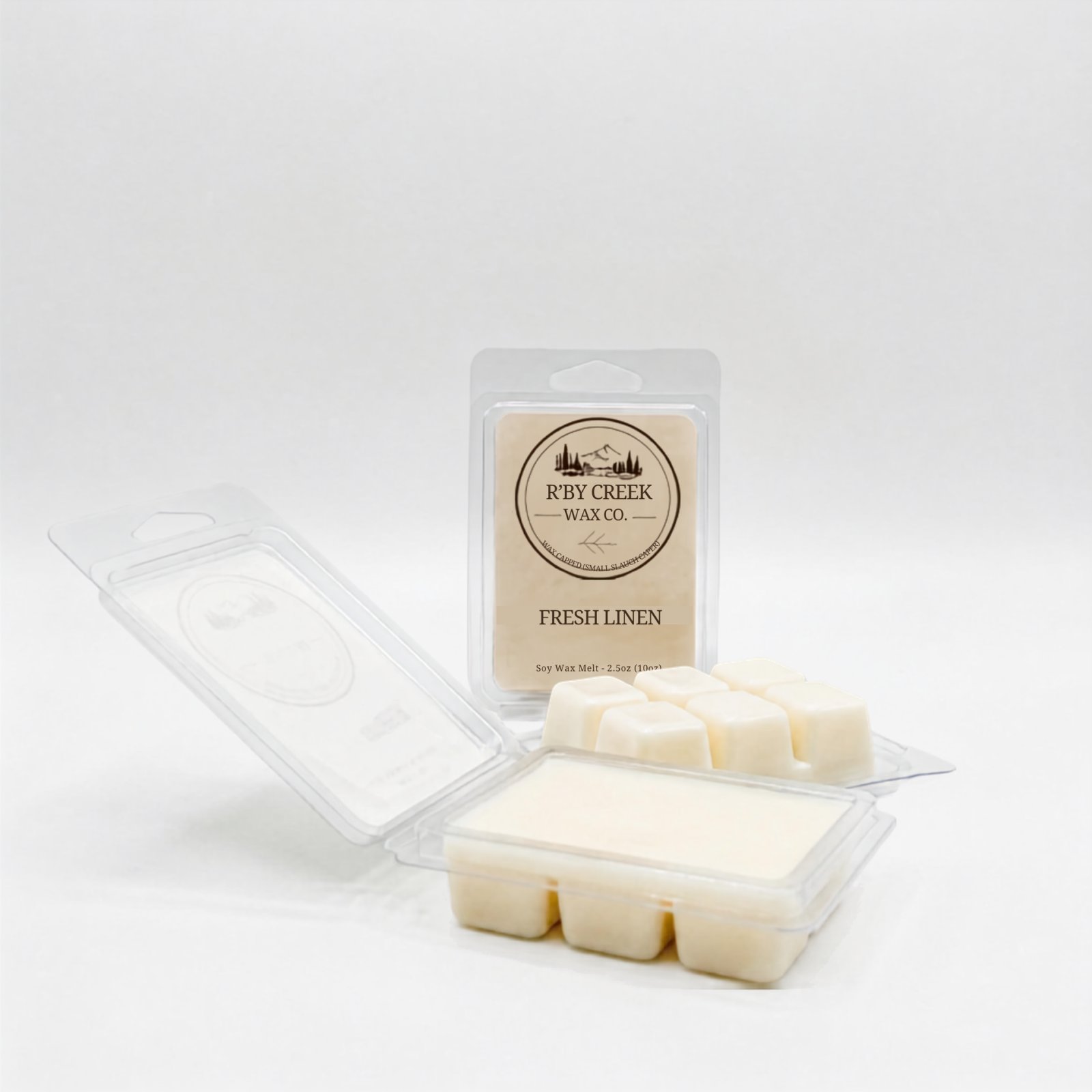
Put the warmer on a stable, heat-safe surface, away from curtains, bedding, and anything that could tip. Keep it out of reach of children and pets. Then think about airflow:
- Near a window or door: helps vapor disperse and escape.
- Across the room from the bed: keeps direct inhalation low while you sleep.
- Away from the head of the bed: the closer the warmer, the more you breathe in.
- Never on a nightstand beside your pillow.
If you are setting up a warmer in a compact apartment, our guide to luxury wax melts for small apartments has placement and scent-strength tips for tight rooms.
Sensitive Groups, Pets, and Small-Space Precautions
Some people and some animals are more affected by airborne fragrance than others. If anyone in the room has asthma, allergies, or respiratory sensitivity, treat melts as an optional extra, not a default. Here is a concrete approach.
For people with respiratory sensitivity:
- Cap exposure at 1 to 2 hours per session, then air the room. Shorter, spaced sessions reduce the buildup of VOCs and particles in a small space.
- Keep the warmer across the room from where anyone sleeps or sits for long periods. Direct proximity matters more than total session length.
- Skip melts entirely in a room where someone is actively wheezing or recovering from a respiratory illness.
- Watch for these signs and switch the warmer off if they appear: headaches or dizziness, coughing, wheezing, or a tight chest, eye, nose, or throat irritation.
For pets: Cats and dogs have a far stronger sense of smell than we do, and birds and reptiles are especially sensitive to airborne compounds. Our guide to safe home fragrance for pets covers which scents to avoid and where to place a warmer around cats and dogs.
For children: Keep warmers out of reach and on a stable surface. The wax itself is not the main concern; the heated warmer and the concentrated fragrance in a small room are.
A simple rule ties it together: in a small bedroom, use less, for less time, and give the room air between sessions. That protects the people and animals who share the space.
Building a Scent Routine with Ruby Creek Wax Co.
A safe routine in a small bedroom is simple: shorter sessions, a cracked window, a warmer placed away from the bed, and a wax type that suits the space. Do that, and melts become a low-effort way to make a compact room feel calm.
That is how we would do it. Our specialty wax melt collection is built for exactly this kind of routine, with handcrafted melts made for small, lived-in spaces.
A final word on trust: if you want to know what is in a melt, ask.
Small bedrooms ask more of a fragrance than big open rooms do, and getting the routine right is what makes melts work well without overwhelming the space. Ruby Creek Wax Co. makes handcrafted wax melts for people who want a calm, considered scent ritual at home.
Frequently Asked Questions
Are wax melts safe to use in a small bedroom?
Wax melts are flame-free, so they avoid the open-flame and smoke risks of candles. The main considerations in a small bedroom are fragrance concentration and air exchange. Because the room holds less air, scent compounds build up faster. Keep sessions to roughly one to two hours, crack a window or door for a few minutes afterward, and place the warmer away from the bed and any breathing zone. Anyone with asthma or allergies should test a short session first.
Do wax melts affect indoor air quality?
Wax melts release fragrance compounds and fine particles into the air as the wax warms, and in a small, closed bedroom those concentrations rise faster than in an open living area. The effect is generally modest compared with candles or incense because there is no flame and no combustion byproducts. Air exchange is the deciding factor: a room with a cracked window or open door clears scent compounds far quicker than a sealed one, so ventilate when using wax melts rather than relying on the warmer alone.
Should you ventilate a room when using wax melts?
Yes. Ventilation when using wax melts keeps fragrance compounds and airborne particles from accumulating, which matters most in a small enclosed space. Open a window a few centimetres for five to ten minutes during or after a session, or leave the bedroom door open to let air move through. Running a ceiling fan on low also helps stir the air. You do not need a dramatic draft; steady air exchange is enough to keep the room feeling fresh rather than stuffy.
How long should you use a wax melt in a small room?
Aim for sessions of about one to two hours in a bedroom, then turn the warmer off and air the room. Small rooms reach a comfortable scent throw quickly, so longer sessions add little beyond fragrance fatigue. If you want scent through the evening, run the warmer in shorter blocks rather than continuously. Replace the wax once the scent fades or the melt looks spent, and always follow the warmer manufacturer's guidance on maximum run time.
