

How to Choose Scented Candles for a Cozy Home
Last Updated: November 7, 2026
Quick Summary
To choose scented candles, start with your own scent memory rather than the label, then match scent families to each room's mood. Test cold throw versus hot throw before committing, and account for room size and ventilation, since the same scent can smell bold in a bathroom and faint in an open-plan space.
- Write down three smells that feel like home to identify which scent families to shop for.
- Match woody and vanilla scents to living rooms, lavender to bedrooms, and citrus to bathrooms.
- Cold throw is strength before warming; hot throw is strength once melting, and they can differ.
- Big spaces with high ceilings need more scent, while small closed rooms need less.
- Ceiling fans are the most common culprit reducing perceived scent throw in a small room.
Table of Contents
- Start With Your Scent Preferences, Not the Label
- Match Scent Families to Rooms and Moods
- Test Before You Commit: Cold Throw vs. Hot Throw
- How Room Size and Ventilation Change Fragrance Strength
- Compare Wax Types, Wicks, and Ingredient Disclosures
- How Long Do Wax Melts Last, and What Does Value Really Look Like?
- Finding Strong Scented Wax Melts That Still Feel Refined
- Wax Melts for Fragrance-Sensitive People: What to Check First
- Frequently Asked Questions
Start With Your Scent Preferences, Not the Label
Most shoppers pick a scented candle by flipping the jar and reading the name. That is backwards. The better approach is to start with your own scent memory, then find products that match it. The scent should fit the person, not the other way around.
Here is the simplest way to think about how to choose scented candles and melts that you will actually love. Your nose remembers places, not labels.
Map Your Scent Memory Before You Shop
Write down three smells that make you feel at home. A few common ones:
- Rain on a wood deck
- Vanilla and butter from a kitchen
- Fresh linen pulled from the dryer
- Citrus peel on your hands
- Cut grass in late spring
Those notes point to a scent family. A woody or fresh memory usually means you will like cedar, pine, or eucalyptus. A kitchen memory leans toward vanilla, caramel, or spice. A clean-laundry memory fits cotton and linen blends.
Do this before you browse, so you know which scent families to look for.
Match Scent Families to Rooms and Moods
Rooms set the mood, and scent should follow. A bedroom and a kitchen call for very different fragrances. Matching them well is the core of choosing scented candles that feel intentional.
Use this simple room guide:
| Room | Best scent families | Mood it creates |
|---|---|---|
| Living room | Woody, vanilla, amber | Warm and welcoming |
| Bedroom | Lavender, chamomile, soft floral | Calm and restful |
| Bathroom | Citrus, eucalyptus, fresh herbs | Clean and bright |
| Kitchen | Vanilla, spice, baked notes | Cozy and lived-in |
| Home office | Citrus, mint, rosemary | Focused and alert |
Floral notes like jasmine and lavender calm a busy room. Citrus and fresh notes wake it up. Woody and vanilla notes wrap a space in warmth.
The Best Wax Melts for Different Rooms
Wax melts are easy to change from room to room, since you can swap the scent quickly. For a bedroom, choose a soft lavender or chamomile melt. For a living room, go woody or vanilla. For a bathroom, a bright citrus melt is hard to beat.
Keep strong, sweet melts out of small bedrooms. They can overwhelm a tight space. Save them for open areas where the scent has room to spread.
Test Before You Commit: Cold Throw vs. Hot Throw
Before you buy, smell the product cold. Cold throw is how strongly a melt or candle smells before it is warmed. Hot throw is how strongly it smells once it is melting. A product can have great cold throw and weak hot throw, or the reverse.
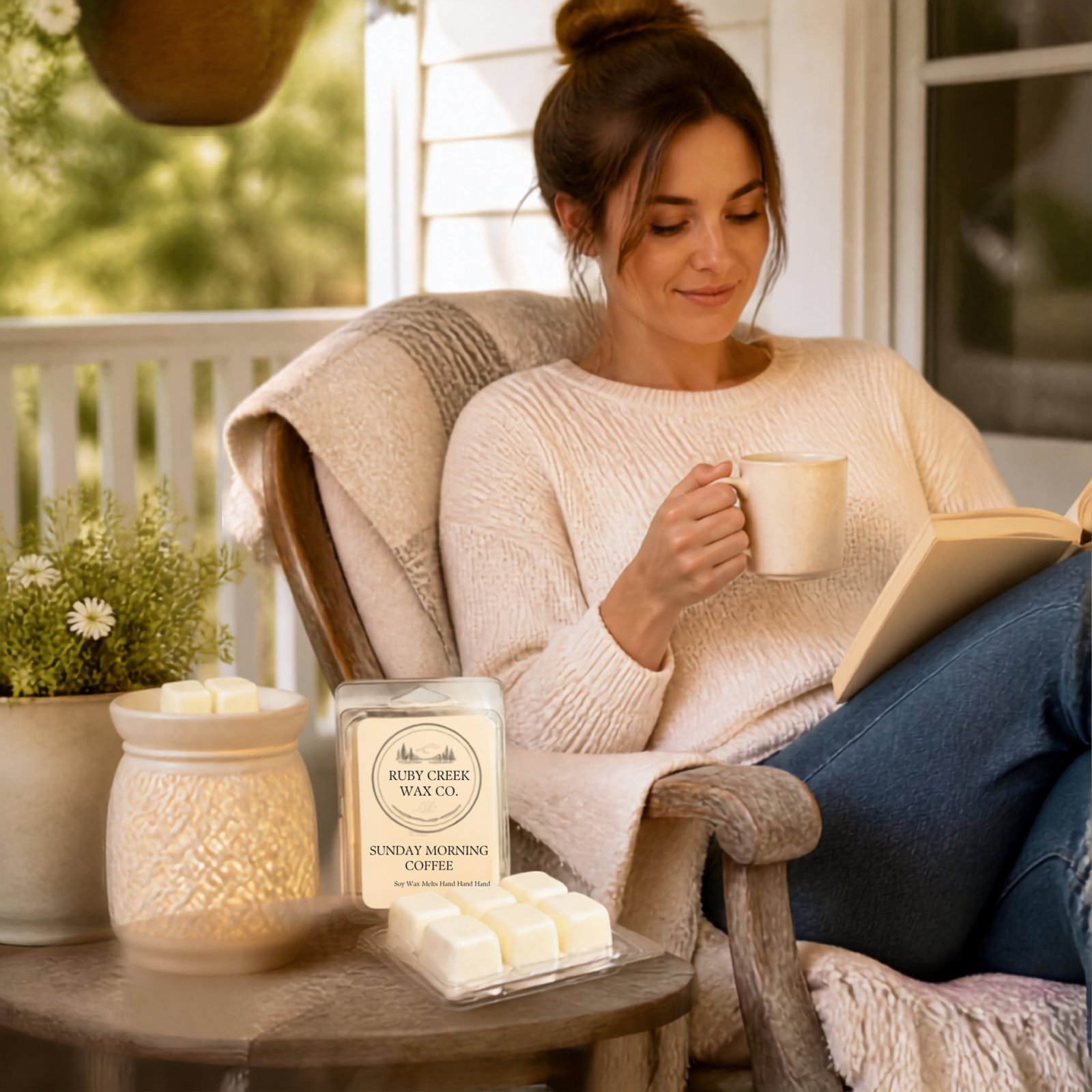
Here is how we suggest testing:
- Smell the cold product and note the strength.
- Melt one cube in a small room for 20 to 30 minutes.
- Judge how far the scent travels and how long it lingers.
- Compare two or three scents side by side.
For a deeper look at judging throw before you buy, read our guide on identifying strong scent throw candles.
How Room Size and Ventilation Change Fragrance Strength
The same wax melt can smell bold in a bathroom and faint in an open-plan living room. Room size and airflow decide how much fragrance actually reaches your nose, and they matter more than the label's strength claim. A big space with high ceilings needs more scent. A small, closed room needs less.
A useful rule of thumb is to think in terms of air volume, not floor area. A room with a vaulted ceiling or a two-story foyer holds considerably more air than a room with a standard ceiling.
Air exchange is the other half of the equation. Every time a range hood, bathroom fan, or open window pulls air out of a room, it takes fragrance with it. A melt can seem to smell strong for the first stretch of time and then fade, because the scent is diluted and carried away by air movement.
Watch out: ceiling fans are the most common culprit. A ceiling fan can reduce perceived scent throw in a small room, so consider turning it off while warming or choosing a stronger melt.
In open-plan layouts, one strong melt in the middle rarely works. The scent has too much volume to fill and too many air paths to escape through. A better approach is two warmers in distant corners, each with a moderate melt, so the scent layers rather than competes.
For connected spaces, match the melt to the smallest adjoining room rather than the largest. A melt that is right for a 400-square-foot open living area will overwhelm a 40-square-foot hallway or powder room that shares the same air. If you can close a door between zones, do it; if you cannot, choose a milder melt and let the warmer run longer.
Ventilation also affects how quickly a melt's scent disappears after you stop warming it. In a tight, well-sealed room, residual scent can linger for hours. In a drafty room, it clears in minutes. Neither is wrong, but it changes how you plan: in a drafty space, warm a melt shortly before guests arrive rather than hours ahead.
Compare Wax Types, Wicks, and Ingredient Disclosures
Wax type shapes how a melt performs: how quickly it releases scent, how long a cube lasts, and how the residue behaves in your warmer. For a closer look at how the two most common bases stack up, see our soy vs paraffin wax melts comparison. The three bases you will see most often are soy, paraffin, and beeswax, and each has a distinct trade-off.
Soy wax melts at a lower temperature and tends to release scent gently and steadily. Paraffin melts hotter and throws strongly and quickly, but a cube can spend its fragrance faster. Beeswax is dense and tends to hold scent longer per cube. Many melts are blends, and a blend is not a red flag; it is often how a maker balances throw, longevity, and cost.
Wax melts skip the wick entirely, which removes one variable that candle shoppers have to worry about. That is one reason melts are easier to evaluate before purchase: there is no wick size, no trimming routine, and no tunneling risk to factor in. What matters instead is the wax base, the fragrance load, and how the melt behaves in your warmer.
Reading the Ingredient List Without the Marketing Spin
Skip the front label and read the back. The front is written by marketing; the back is written to meet labeling expectations. Look for:
- The wax type, named plainly rather than as a blend of unspecified "natural waxes"
- Fragrance listed as fragrance oils, essential oils, or a blend of both
- Dyes or additives you would rather avoid
- A clear note on what is not included, such as phthalates or parabens
Words like "natural," "clean," and "non-toxic" are marketing terms, not regulated ones. They do not have a single legal definition, so two products can both use them and mean very different things. The ingredient list tells you more than the front of the package ever will.
A common pattern is that "essential-oil-based" means the fragrance contains some essential oils, not that it is entirely essential oils. Essential oils are expensive and often volatile, so most melts that throw well use a blend of essential oils and fragrance oils. That is not a problem in itself, but it does mean the phrase tells you less than it appears to.
Watch out: a short ingredient list is not automatically better. Some fragrance components are disclosed under generic terms, and a very short list can simply mean the maker discloses less, not that the product contains less.
If a maker will not tell you the wax base or the fragrance type, treat that as information in itself. A clear, specific disclosure is a reasonable signal that the product has been formulated with care, and it gives you something concrete to compare across brands.
How Long Do Wax Melts Last, and What Does Value Really Look Like?
Wax melts give several hours of scent per cube, and the exact duration depends on the warmer, the cube size, and the fragrance load. Check the product details on our website for current information.
Our guide to the best long lasting scented wax melts walks through how to compare longevity before you buy.
Finding Strong Scented Wax Melts That Still Feel Refined
A strong melt should not smell harsh or synthetic. The best strong scented wax melts balance power with polish: they fill a room without giving you a headache. Look for a clear fragrance description and a named wax base.
At Ruby Creek Wax Co., our wax melts are handcrafted. If you are ready to pick a scent, browse our scented wax melts collection and match one to your favorite room.
Wax Melts for Fragrance-Sensitive People: What to Check First
If scent bothers your nose or breathing, start small. Choose milder scent families like lavender, citrus, or fresh herbs over heavy sweet blends. Melt one cube in a well-ventilated room and see how you feel. Check the ingredient list for fragrance oils and dyes, and avoid anything with a vague description.
People with allergies or asthma should test carefully and keep rooms aired out. For a closer look at gentler options, read our non-toxic soy wax melts guide.
Choosing scented candles and melts comes down to matching your scent memory, your room, and your wax type. It takes a little testing, but the payoff is a home that smells like it was made for you. Ruby Creek Wax Co. handcrafts small-batch wax melts designed to fill your space with warm, refined fragrance. Explore our handcrafted wax melts and find the scent that fits your favorite room.
Frequently Asked Questions
How do I choose a scented candle if I'm buying for someone else?
Start with the room they will use it in and the mood they want. Fresh and citrus scents suit kitchens and entryways, while woody or vanilla scents fit bedrooms and living rooms. If you are unsure, choose a mid-strength scent rather than an intense one, and pick a wax melt sampler so they can test several scent profiles at home. A small set of three to five scents is usually safer than one bold choice.
How can I tell whether a scented candle will actually have a strong scent throw?
Smell it cold first, then ask how it performs when warmed. A strong cold throw is a good sign, but hot throw depends on fragrance load, wax type, and the size of the room. Look for brands that describe fragrance strength and give room-size guidance. If you want strong scented wax melts, choose those labeled for open or large spaces and test one cube before melting a full pack.
How long do wax melts last, and how many burns should I expect?
Burn time depends on the wax, fragrance load, and warmer temperature. Check the product details on our website for current information. Scent fades before the wax disappears, so replace a cube when the aroma weakens rather than waiting for it to fully melt away.
Are scented candles safe if I have fragrance sensitivity or allergies?
Choose products with clear ingredient disclosures and avoid synthetic musks or dyes if you react to them. Start with a low-fragrance option and ventilate the room. If you have asthma or a diagnosed allergy, speak with a healthcare professional before using any home fragrance, and test a single cube in a well-ventilated space first.
