

7 Wax Melt Mistakes That Ruin Scent Throw
Last Updated: November 8, 2026
Quick Summary
Weak scent throw from wax melts usually comes down to seven fixable mistakes: too few cubes for the room, judging the scent before the melt pool forms, a warmer running too cool or too hot, reusing spent wax, poor storage, clashing scents, and expecting a subtle gourmand to perform like a sharp citrus. Fixing technique, equipment, and expectations improves throw without buying anything new.
- Break two cubes for a bedroom or office and three or four for an open-plan living area.
- Judge a melt at the twenty-minute mark, not at minute three.
- Our soy wax melts are listed at a burn time of six to seven hours per cube.
- Let the warmer go cold, then press one edge of the solid wax disc and lift it out whole.
- Keep one scent per room at a time so a sharp citrus and a heavy gourmand do not muddle each other.
Table of Contents
- Why Your Wax Melts Smell Weak (and What Actually Fixes It)
- How to Use Wax Melts: The Steps Most People Skip
- Choosing a Wax Melt Warmer: Electric vs Tealight
- How Long Do Wax Melts Last? Reading the Real Numbers
- How to Change Wax Melts Without Making a Mess
- Soy Wax, Fragrance Oils, and the Environmental Trade-Offs
- Wax Melts vs Candles: What Changes in Your Room
- Build a Scent Collection That Works Together
- Frequently Asked Questions
Why Your Wax Melts Smell Weak (and What Actually Fixes It)
Most weak-scent complaints trace back to one of seven fixable mistakes, not a bad batch of wax. A common story is that a wax melt smells wonderful in the package, then barely registers in the living room. The cause is almost always technique, equipment, or expectations, and every one of those is correctable.
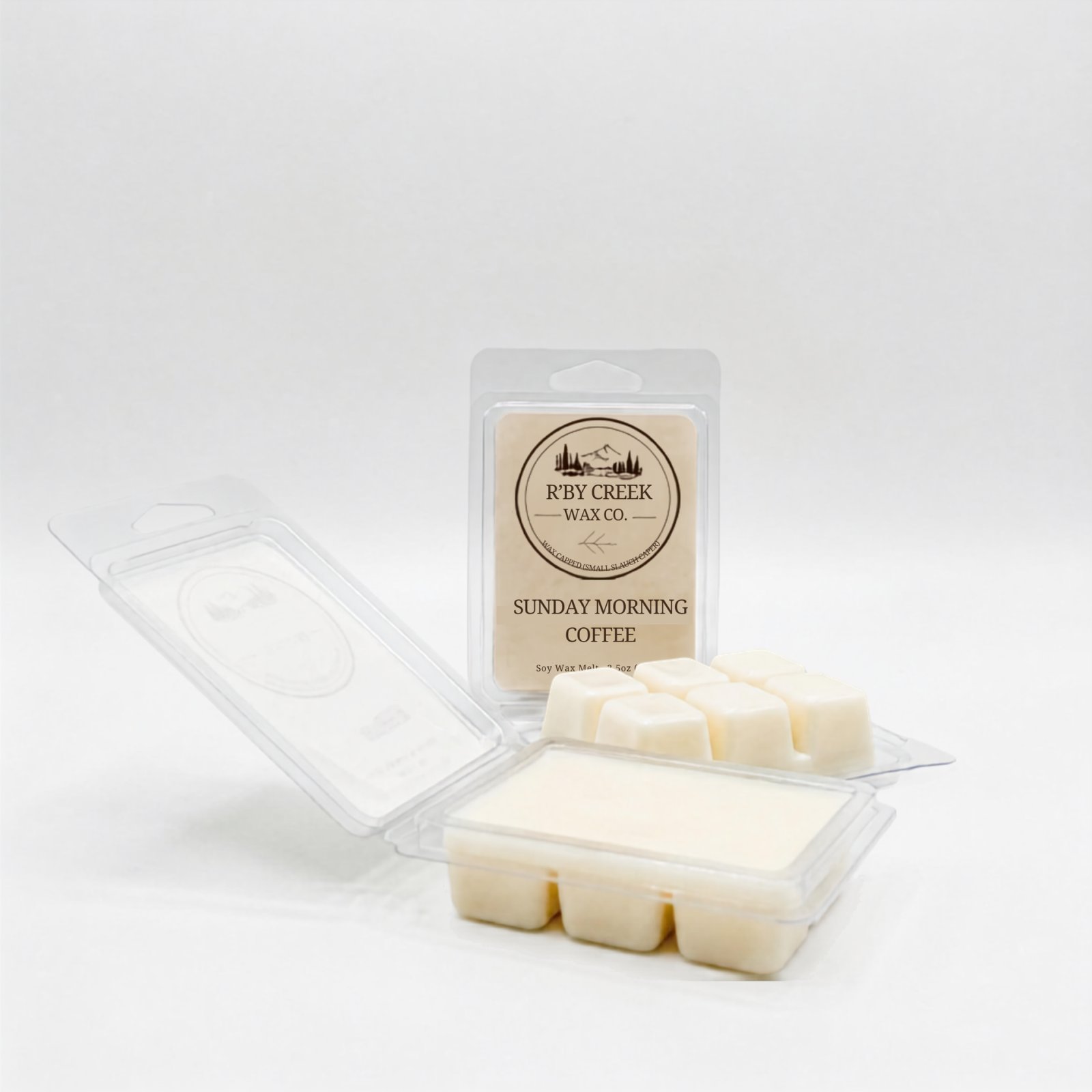
The seven mistakes we see most often:
- Too few cubes for the size of the room
- Pulling the plug before the melt pool forms
- A warmer that runs too cool or too hot
- Reusing spent wax long after the fragrance is gone
- Storing melts near heat or in open air
- Layering scents that fight each other
- Expecting a subtle gourmand to perform like a sharp citrus
Fix those and scent throw improves without buying anything new. For a deeper walkthrough of the fixes, read our guide on how to improve candle scent throw. Where it still falls short, the warmer is usually the culprit.
How to Use Wax Melts: The Steps Most People Skip
Using wax melts correctly comes down to four steps: break off the right amount of wax, place it in a clean warmer dish, let it melt fully before judging the scent, and swap the wax once the fragrance fades. Skipping any one of these is where most disappointment starts.
Here is the sequence we recommend:
- Break two cubes from the bar for a standard bedroom or office.
- Set them in a dry, clean warmer dish, never overfilled.
- Turn on the warmer and leave the room for ten minutes.
- Return and assess, then adjust the cube count up or down.
The step people skip is the wait. Fragrance needs time to pool and travel.
Match the Cube Count to the Room
Cube count should scale with square footage, not with how strong you want the scent. Two cubes suit a bedroom, bathroom, or small office. An open-plan living area usually needs three or four. Piling in six cubes in a small room does not make the fragrance stronger; it overwhelms the nose, and you stop registering it within minutes. Our wax melt FAQ covers cube counts and warmer setup in more detail if you want a quick reference while you experiment.
Give the First Melt Enough Time
The first ten to fifteen minutes of a melt are not representative. Wax has to liquefy completely before fragrance releases at full strength, and a cold room slows that down. Judge a melt at the twenty-minute mark, not at minute three. If it is still faint after half an hour, add a cube rather than turning up the heat.
Choosing a Wax Melt Warmer: Electric vs Tealight
Electric warmers and tealight warmers both melt wax, but they behave differently in ways that affect scent throw, safety, and how much attention the warmer needs. Electric warmers hold a steadier temperature and suit long, unattended sessions. Tealight warmers run hotter at the start and need a lit candle underneath, which means open flame in the room.
| Feature | Electric Warmer | Tealight Warmer |
|---|---|---|
| Heat source | Bulb or heating plate | Tea light candle |
| Temperature consistency | Steady | Rises then falls |
| Flame involved | No | Yes |
| Best for | Bedrooms, offices, overnight use | Short sessions, no outlet nearby |
| Supervision needed | Minimal | Constant |
| Placement | Flat, stable surface near an outlet | Flat, heat-safe surface away from drafts |
For renters and anyone with pets or small children, the electric option removes an open flame from the equation entirely.
Safe Placement and Supervision
Where you put the warmer matters as much as which type you buy. Set it on a flat, heat-resistant surface, keep it at least a foot from curtains, paper, and bedding, and never move a warmer while the wax is liquid.
Watch out: a warmer that scorches wax, leaves a dark ring in the dish, or smells acrid is running too hot, and continuing to use it shortens the life of every melt and raises the risk of a cracked dish.
What Warmer Temperature Does to Scent Throw
Warmer temperature controls how quickly fragrance oils evaporate. Too cool and the wax never fully pools, so the scent stays locked in. Too hot and the oils burn off fast, giving a strong first hour followed by nothing. A gentle, even melt is the goal. A warmer that brings the wax to a full liquid pool within a reasonable window is generally in a workable range; if it takes much longer, the warmer may be underpowered for the room, and if the wax smokes or discolors, it is running too hot.
How Long Do Wax Melts Last? Reading the Real Numbers
Our soy wax melts are listed at a burn time of six to seven hours per cube.
What shortens that window:
- A warmer running too hot, which drives oils off early
- Drafty rooms that carry fragrance away
- Mixing old spent wax with fresh cubes
- Storing bars in warm, humid spots before use
If you want the longest possible return per cube, look for melts described with a stated burn time per cube rather than vague claims about "hours of fragrance." Our guide to the best long lasting scented wax melts breaks down what to look for on a label.
How to Change Wax Melts Without Making a Mess
Changing wax is simple once it is fully cooled: let the warmer go cold, press one edge of the solid wax disc with a fingertip or a dull tool, and lift it out whole. Warm wax smears; cold wax pops out clean.
A few habits keep the dish clean:
- Wipe the dish with a paper towel while it is still slightly warm after removing the disc.
- Keep a dedicated dish per scent family so notes do not carry over.
- Store spent discs in a lidded container until you toss them.
Watch out: chipping at cold wax with a knife can crack a ceramic dish. Use your fingers or a plastic scraper instead.
Soy Wax, Fragrance Oils, and the Environmental Trade-Offs
Wax type changes how a melt performs and what happens to it after the fragrance fades, and the honest answer is that no wax is free of trade-offs.
- Soy wax melts at a lower temperature, which tends to give a gentler, slower fragrance release and a longer, cooler pool. It is biodegradable, but soy is a commodity crop, and sourcing, land use, and transport all carry environmental costs that a "plant-based" label does not erase.
- Paraffin runs hotter and throws scent hard and fast, then fades. It is a refined petroleum byproduct, and how cleanly it burns off depends on the refinement grade; a well-refined paraffin is not the same as a cheap one.
- Beeswax is durable and has a natural honey note, but it is animal-derived, costlier, and often blended with other waxes to control the melt point.
- Blends are common because they combine soy's slower release with paraffin's stronger throw; ask a maker what the blend ratio is rather than accepting a single-wax claim.
Our melts use 100% soy wax, hand-poured, with fragrance and essential oils that are paraben and phthalate free. The containers can be recycled. For a side-by-side look at how the two main wax types compare, read our breakdown of soy vs paraffin wax melts benefits.
Fragrance Oils and Ingredient Claims
"Phthalate-free" and "paraben-free" are meaningful labels, but they are not the same as "non-toxic," and no melt is truly fragrance-free once it is warmed. Fragrance load, the percentage of oil in the wax, drives both throw and how long a cube lasts; a higher load throws harder but can fade faster if the warmer runs hot. Read the label for what is actually stated rather than what the marketing implies.
Disposal and the End of a Melt
Spent wax still has to go somewhere. Once the fragrance is gone, let the disc cool, lift it out, and dispose of it in household waste rather than pouring it down a drain, where it can set and block pipes. Reusing a spent disc with fresh cubes is a common habit, but it dilutes the new fragrance and is one of the reasons a melt seems to fade early.
Wax Melts vs Candles: What Changes in Your Room
Wax melts deliver fragrance without a wick or a flame, which changes the scent experience. A candle scents a room as it burns and stops the moment you snuff it. A wax melt keeps releasing fragrance for as long as the warmer runs, and you can switch scents in minutes by swapping the wax.
The trade-offs are real:
- Candles give ambiance from the flame; melts give fragrance only.
- Melts let you test a scent cheaply before committing to a full bar.
- Melts need a warmer and an outlet; candles need nothing.
For a renter who cannot alter the space, a small electric warmer and a two-cube melt is the lowest-effort way to change how a room feels.
Build a Scent Collection That Works Together
A scent collection works best when you group melts by mood rather than by season, so any two you own can run in sequence without clashing. We sort ours into three families: fresh, grounding, and gourmand.
- Fresh: Eucalyptus & Lavender, for winding down at the end of the day.
- Grounding: Palo Santo, earthy and woody, good for focused work.
- Gourmand: Vanilla Cream and Sunday Morning Coffee, warm and comforting for slow mornings.
Keep one scent per room at a time. If you want help pairing notes before you buy, our guide on how to choose the right wax melt scent walks through the combinations that hold up.
Weak scent throw is almost never the wax's fault. It is the cube count, the warmer, the wait, or the storage, and each of those is a five-minute fix.
Frequently Asked Questions
Do wax melts need a warmer?
Yes. Wax melts have no wick, so they need an external heat source to melt the wax and release fragrance. That means a wax melt warmer, either electric or tealight-powered. Never melt wax directly on a stove, over an open flame, or in a pot you also cook with. Place the warmer on a flat, heat-safe surface away from curtains and out of reach of pets and children, and follow the warmer's own instructions for maximum melt time.
How many wax melts should you use at once?
Start with one cube in a small room such as a bathroom or bedroom, and use two cubes in an open living area. Ruby Creek Wax Co. melts are sold in 2 oz containers, and each cube gives roughly 6 to 7 hours of fragrance. Adding more cubes than the warmer dish can comfortably hold does not increase scent throw much; it just makes the melt pool deeper and the wax harder to change later.
Are wax melts reusable?
Partially. Once the fragrance has faded, the wax still melts, but it will not release much scent. The simpler habit is to change the wax as soon as the scent fades, which keeps your warmer working at full strength.
How do you know when a wax melt has stopped smelling?
The clearest sign is that you stop noticing the scent when you walk into the room, not when you are standing over the warmer. Scent fatigue plays a role, so step outside for a few minutes and come back before deciding. If the melt pool is still full but the room smells flat, the fragrance oils are spent. That is your cue to change the wax melts rather than add more heat.
